The favour is the last thing a guest touches on your wedding day, and the first thing they decide whether to carry home or leave on the table. Here is what makes that decision go your way, what works in Singapore specifically, and how to make your own instead of ordering three hundred of something.
What makes a favour worth giving
The uncomfortable truth about wedding favours is how many of them get left behind. Singapore wedding media returns to this point often: SingaporeBrides frames the whole category around choosing with intention, precisely because so many favours end up abandoned once the ballroom empties.
That gives you a simple filter. A favour gets taken home when it passes at least one of three tests:
- It gets used. Something that earns a place on a shelf or a bedside table rather than a drawer.
- It travels well. Guests are already carrying an ang bao, a phone and a jacket. Anything fragile, bulky or melting is working against you.
- It means something. A favour tied to the two of you beats a generic trinket, even a more expensive one.
Miss all three and you have bought three hundred small objects that go into a bin bag at the end of the night.
The categories that work here
Local suppliers cluster around a familiar set, and The Honeycombers keeps a running round-up of where to buy. In broad strokes:
- Edible. Cookies, chocolates, honey, tea. Reliably appreciated, though anything that suffers in the heat between the ballroom and a taxi needs thought.
- Scented. Candles, soaps, reed diffusers. These sit in the sweet spot: used slowly, so the wedding stays in the room for weeks.
- Practical. Tote bags, coasters, keychains. Kept if genuinely good, discarded quickly if not.
- Plantable. Seed paper, tiny succulents. Charming, but they ask something of the guest, which not every guest wants to be asked.
- Donation in lieu. Increasingly common. Pair it with a card that names the cause, so the gesture actually lands.
How many, and when to start
Count one per guest rather than one per household, then add about ten percent. Plus ones appear, headcounts move in the final fortnight, and running short is worse than a small surplus.
On timing, work backwards from the wedding and leave a buffer week. If you are making favours yourself, the making is rarely the slow part. Labelling, boxing and ribbon are what quietly consume a weekend. Start earlier than feels necessary, especially if the favour needs curing or setting time.
Making your own
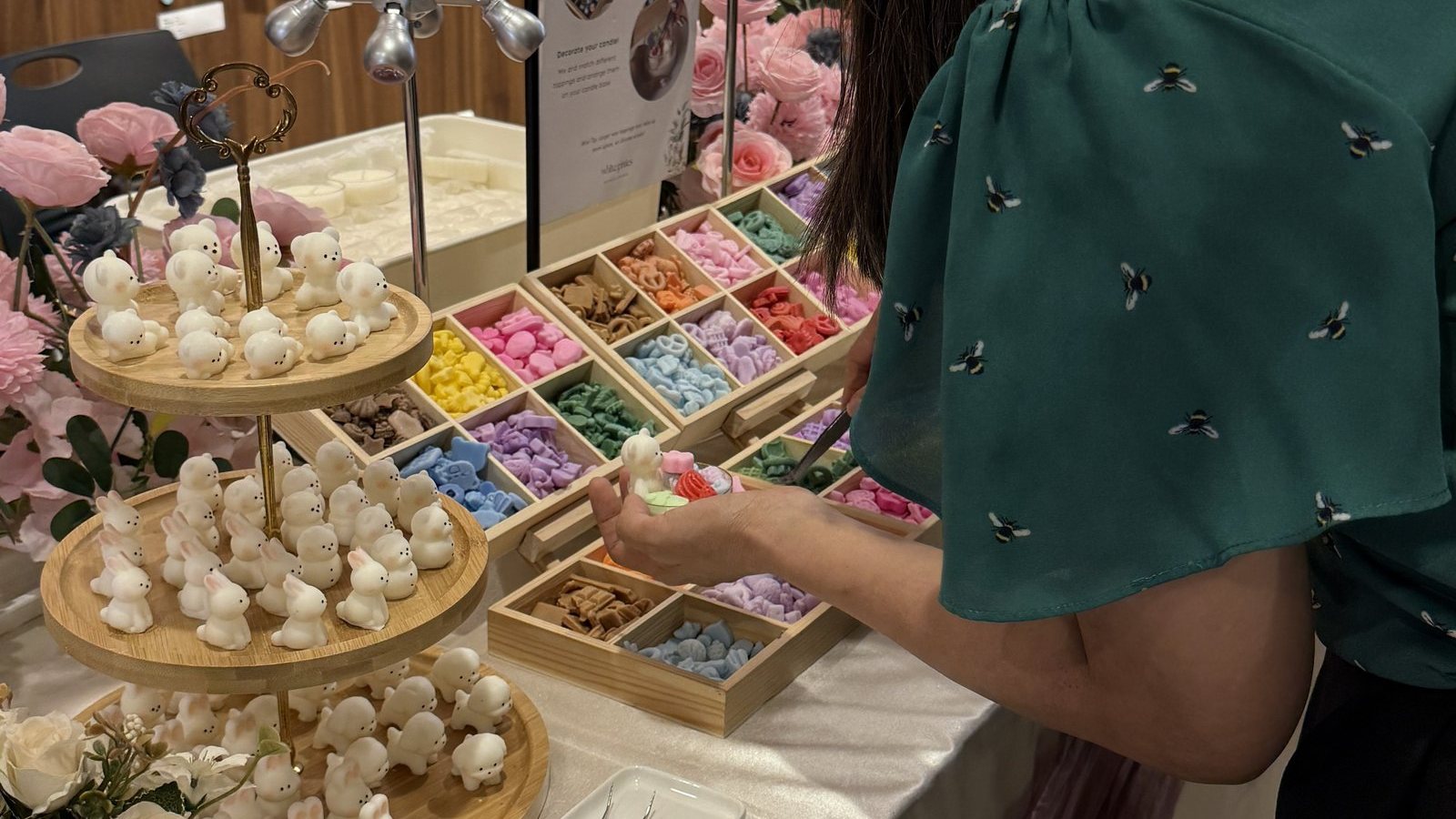
This is the part we can speak to directly, because handmade candle favours are one of the most common reasons couples book with us. A session gets you the favours themselves and an afternoon that is genuinely part of the wedding rather than another item on the checklist.
Mini candles
Small poured candles are close to the ideal favour: used slowly, easy to carry, and completely yours once you choose the scent. You set the fragrance, the colour and the label. Our candle making workshop guide covers how the sessions run and what suits a group.
Scent as the keepsake
If candles are not the look you want, roll on perfume and reed diffusers work the same way: chosen by you, used over weeks, and small enough to sit in a gift box without adding weight. Our craft workshop guide lays out the formats side by side.
Make it a pre-wedding event
Plenty of couples fold favour-making into a hen party or a bridal shower and get both done at once. That is a different occasion with its own planning, and our hen party and bridal shower guide covers it properly.
What kind of favour fits your wedding?
Tap what matters most and we will point you at the format.
Pick an option above.
Not just for weddings. The same logic applies to any occasion where you are giving something to a room full of people. Our personalised gifts guide covers the wider version.
Frequently asked questions
How many wedding favours should I make?
Plan one per guest, then add roughly ten percent. Couples often assume one per household and end up short when guests bring a plus one. If you are making them by hand, count backwards from the wedding date and give yourself a buffer week, because assembly and labelling always take longer than the making.
Are wedding favours still expected in Singapore?
They are common but not compulsory. Wedding media here consistently reports that many favours end up left behind on the table, so the question worth asking is not whether to give one but whether yours is something a guest would choose to take home.
Can we make our own wedding favours?
Yes, and it is one of the few wedding tasks that doubles as an afternoon you will remember. A candle making session lets you set the scent, the colour and the label yourself, and you leave with the finished favours rather than a plan to assemble them later.