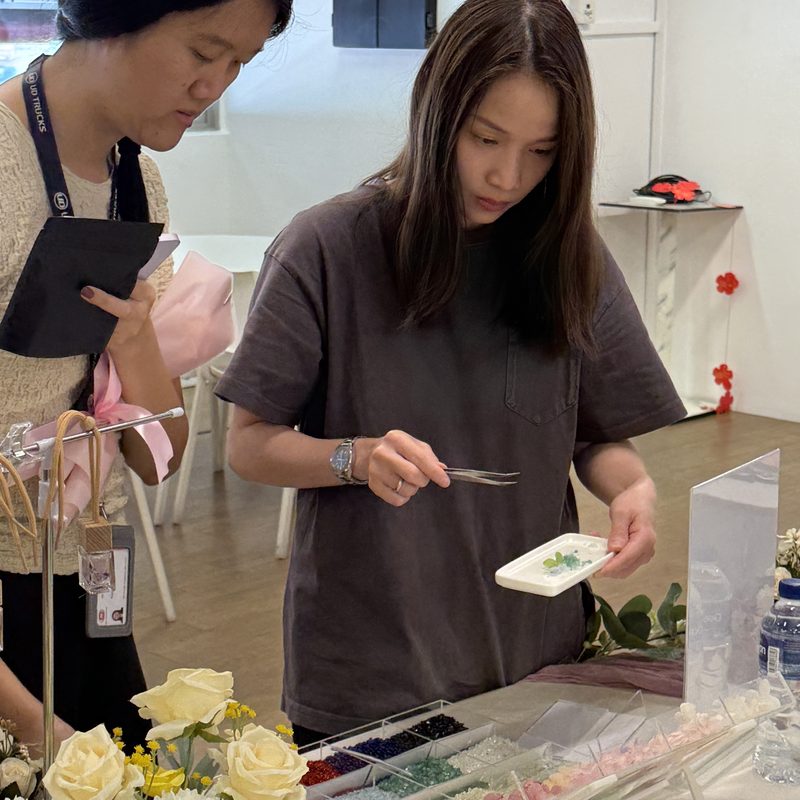
"Craft workshop" now covers a wide island of options in Singapore: pottery, jewellery, resin, floral, leatherwork, and the candle and wax crafts we run ourselves. This guide sorts them by what you actually do in the room, so you can pick one that suits you instead of clicking the first result.
Why craft workshops became the default plan
A craft workshop solves a problem regular outings do not: it gives an afternoon a shape and an ending. You arrive, someone hands you a plan and materials, and a couple of hours later you are holding proof that the time was well spent. No prior skill is assumed at almost any studio, which is why the format works equally well for a first date, a hen party, or a Tuesday with nothing else planned.
Singapore's craft scene has grown well beyond a handful of pottery studios. The Honeycombers' round-up of the city's craft workshops covers pottery, jewellery making, candle crafting, leatherwork, resin art, calligraphy, floral design, and sewing, which gives a sense of how wide the category has become. The point of this guide is to help you narrow that list to the one or two crafts worth your afternoon.
The main categories, and what each one actually involves
Pottery: clay, patience, and a kiln wait
Hand-building (coiling and pinching clay by hand) is beginner-friendly and finishes in one sitting. Wheel-throwing looks satisfying on video but takes longer to get comfortable with, and either way your finished mug or bowl goes through a kiln firing you collect later, not the same day. Good for people who like a slow, tactile process and do not mind waiting for the payoff.
Jewellery and resin: small, fast, and wearable
Jewellery casting and resin art sessions run quick, usually under two hours, and you leave with something wearable: a ring, a pendant, a set of coasters. These suit anyone who wants a fast, low-mess craft with an immediate result, and they photograph well for a gift.
Floral and leatherwork: fewer sessions, more specific taste
Floral workshops (wreaths, dried arrangements) and leatherwork (wallets, cardholders) are smaller categories with fewer studios running them regularly, so book further ahead if a specific date matters. Both suit someone who already knows they like the material.
Candle and wax craft: our own corner of the map
This is what we do, so we will be upfront about the bias: candle and wax workshops are, in our view, the easiest entry point into the whole craft category. There is no kiln wait, no open flame handed to a beginner, and the finished piece is genuinely useful rather than sitting on a shelf. At our studio near Marymount, that ranges from classic candle making to layered sand art candles, piped macaron candles, and scent-led sessions like roll-on blends and reed diffusers. Sessions run 60 to 90 minutes, guided from the first step, and everyone leaves with what they made rather than a claim ticket.
If a flat canvas and paint is more your speed, our art jamming guide covers that territory honestly, including where candle painting fits in as a hands-on twist.
What kind of maker are you?
Tap one and we will point you to the right craft.
Pick an option above.
How to actually choose
Four questions narrow it down fast. How much mess are you willing to deal with (wet clay and resin fumes rule some venues out for a work event)? How long do you have (jewellery and resin run under two hours; pottery and candle sessions run closer to ninety minutes)? Do you need the finished piece the same day (pottery usually says no, everything else says yes)? And how big is the group (candle and wax workshops scale to large groups more easily than a pottery wheel room, which is usually capped by the number of wheels).
Tip: if the group has mixed interests and you cannot agree on one craft, pick the one with zero prior skill required. Candle and wax sessions are built for exactly that kind of group.
What to check before you book
Materials and take-home policy vary more than people expect. Some studios cap the number of pieces or the mould size included in a standard session and treat anything beyond that as an add-on; others build a bigger piece into the base booking. Ask upfront what your session actually includes, and whether the studio supplies aprons or expects you to bring your own. None of this should be a surprise on the day.
Location matters more than it seems too. A studio near an MRT line saves a group the coordination headache of parking, and a ground-floor or lift-accessible unit matters if anyone in the group has mobility needs. If the plan is a work event or a birthday with older relatives, ask about accessibility before you lock in a venue.
Booking tips that save a wasted trip
Studios that fire a kiln or mix custom resin batches often need a minimum headcount or a few days' notice, so a same-week booking is riskier for pottery or resin than for candle and wax sessions, which can usually seat a walk-in group with a day or two of notice. Weekend afternoons go first everywhere; if your date has to be a Saturday, lock it in early in the week.
Book a candle & wax sessionFrequently asked questions
What is the easiest craft workshop for a first-timer?
Anything guided step by step with no prior skill needed, which covers most candle, resin, and floral workshops in Singapore. Pottery wheel-throwing is the one exception; hand-building clay or a candle and wax session is friendlier for a first try.
How far ahead should I book?
A week or two for a small group on a weekday. Weekend slots and anything for six or more people move faster, so book two to three weeks out if the date matters.
Can craft workshops handle a large group?
Many can, though capacity varies a lot by studio and craft. Candle and wax workshops scale well because each person works on their own piece at their own pace; always confirm the group size a studio can seat before you commit to a date.